Torrential downpours for Day One
Two Day leaders emerge after a wet day of racing
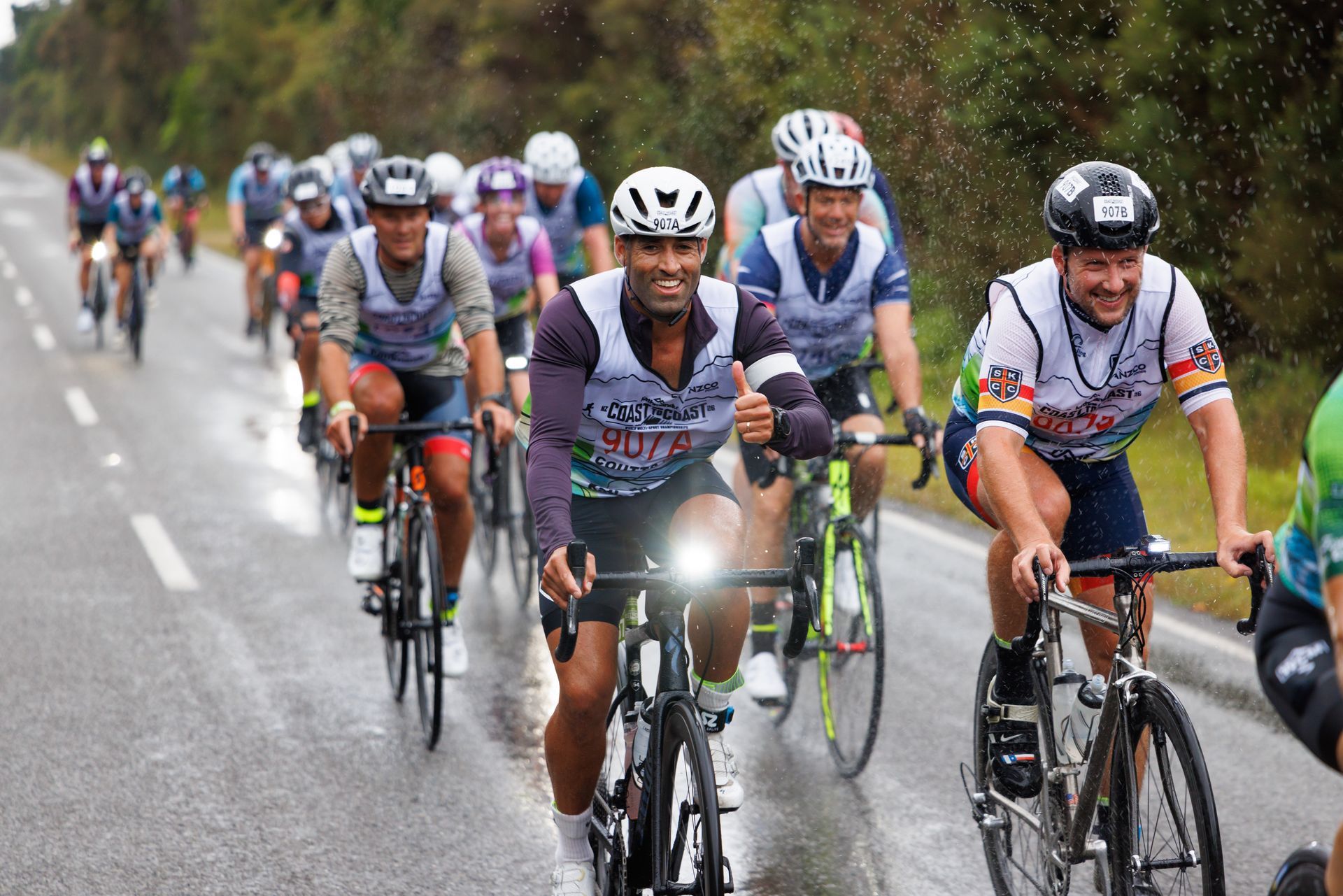
Competitors in the 44th Kathmandu Coast to Coast were met with torrential downpours and testing conditions on day one, as a forecasted nor’wester forced organisers to implement a revised “Plan B” mountain run course across the Main Divide.
Following weather warnings earlier in the week, organisers enacted a contingency route to ensure athlete safety, which saw competitors run up and over the Otira Viaduct instead of over Goat Pass.
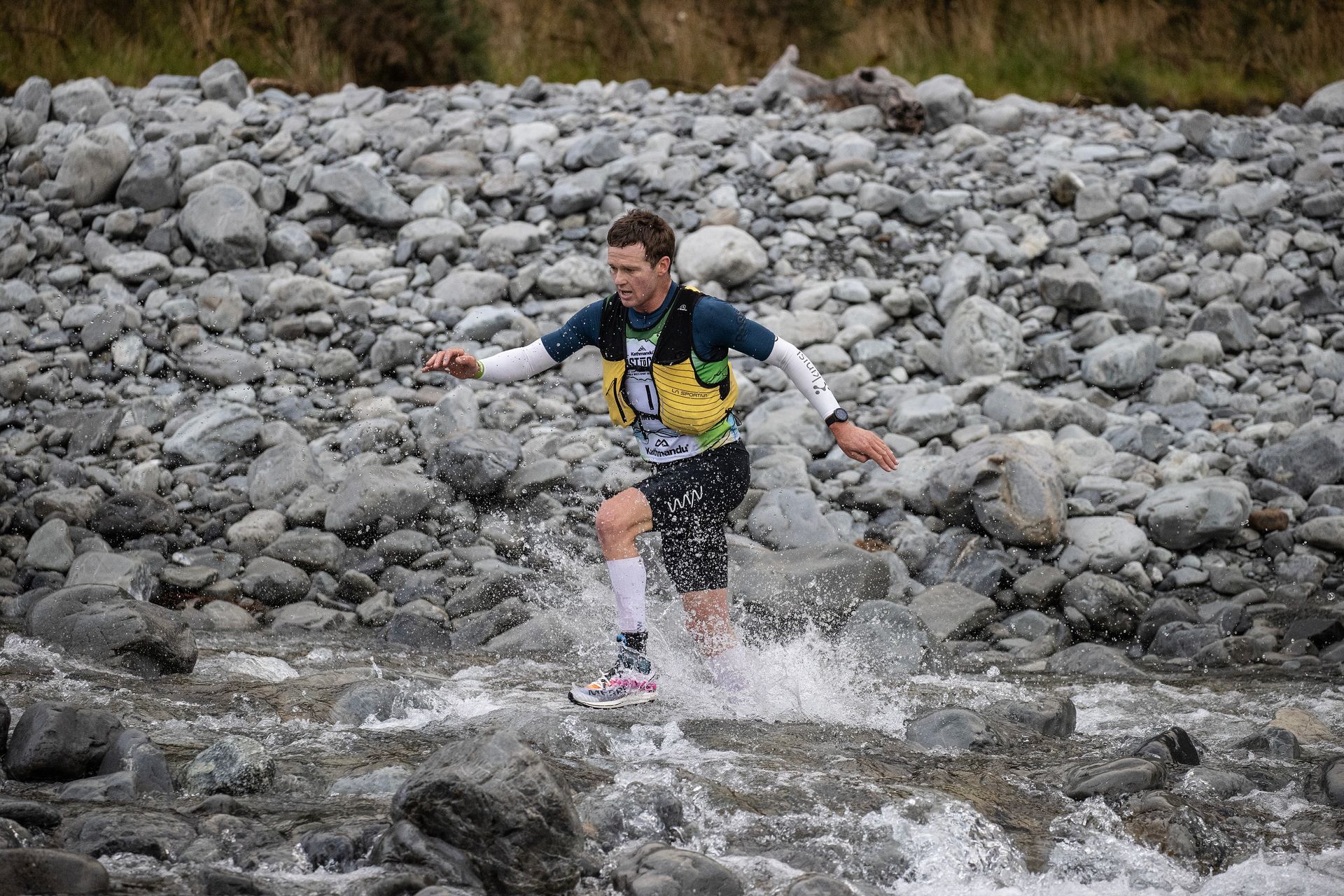
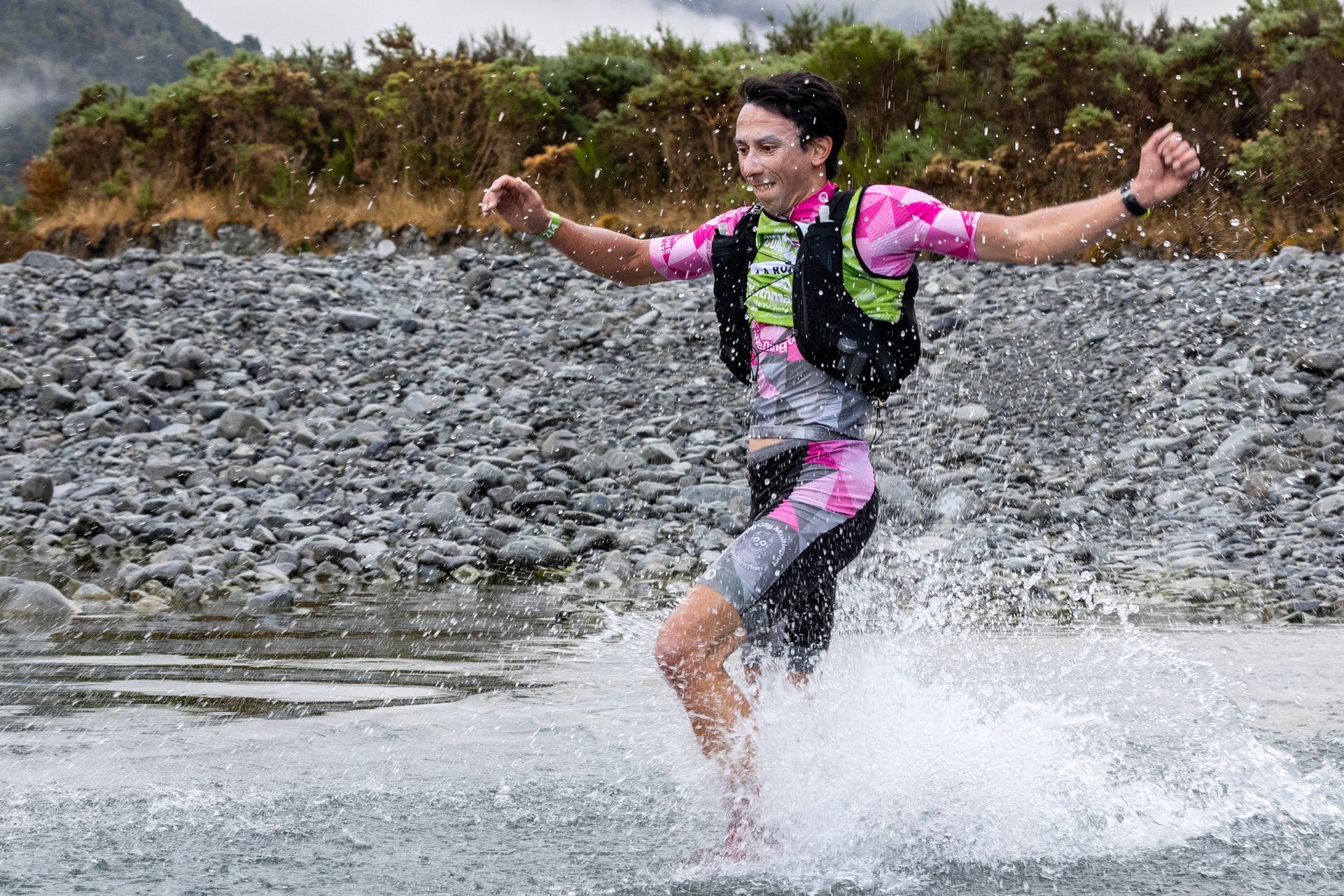
Despite the relentless rain, spirits remained high as athletes tackled swollen rivers, slippery trails and driving wind in one of the event’s most memorable opening days in recent years.
Mountain Run Titles Claimed in Testing Conditions
Men’s Mountain Run Winner – Luca Peters (Nelson)
Nelson’s Luca Peters powered through the revised mountain run to claim the men’s title, unfazed by the sodden terrain.
“I had been kind of doing a lot of hill training on the road so I was prepared for that course anyway,” Peters said.
“Looking at the weather forecast, I wasn’t too surprised.
“Yeah, I definitely had the right nutrition today and just feeling strong the whole way.”
Peters’ preparation paid off as he handled the altered course with composure and strength from start to finish.
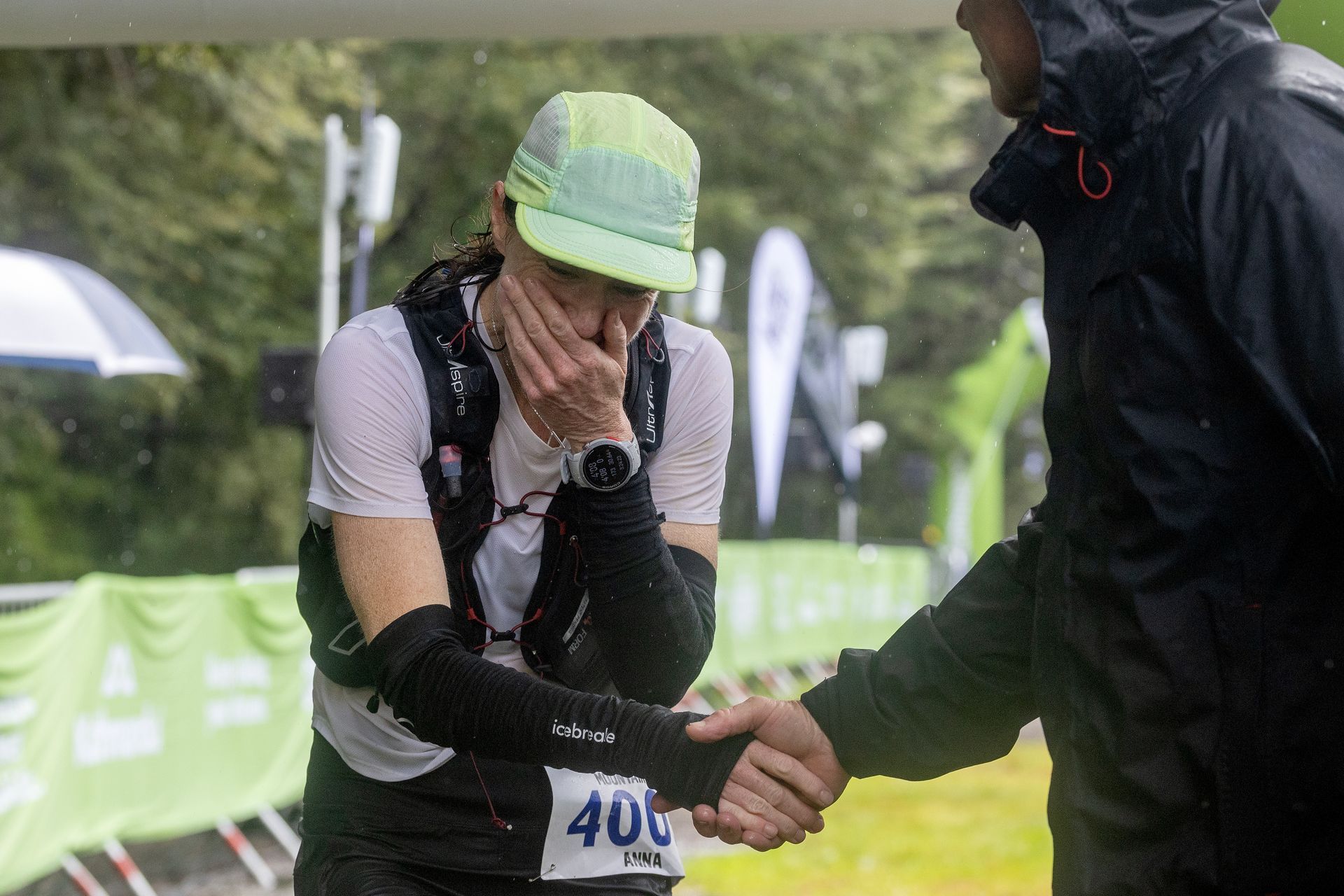
Women’s Mountain Run Winner – Anna Cameron (Christchurch)
In the women’s field, 44-year-old Anna Cameron of Christchurch, competing in the female veterans category, claimed victory in her second time tackling the mountain run. Cameron previously placed third in her age group and drew on that experience to deliver a commanding performance.
“It’s a huge unknown especially with the change in course. You never know who you’re going to be racing against,” Cameron said.
“I knew I was going to do ok, so I just put the foot down.”
Her decisive approach proved the difference on a day when adaptability was key.
Two-Day Race Leaders Emerge
Individual Men’s Two-Day Leader – Dougal Shepherd (Christchurch, 23)
Twenty-three-year-old Dougal Shepherd leads the individual men’s two-day competition after embracing the revised course.
“It was actually a really fun B course, lots of time in the river,” Shepherd said. “I was a bit nervous that it was going to be a heap of road running but I’m stoked that I could use my technical skills.”
Shepherd noted the course adjustments may have shifted the balance slightly.
“It probably favoured the boys that were not from Christchurch. There was a crew of us who came down from Nelson so we were stoked that the run wasn’t up and over Goat Pass otherwise the locals would’ve had the advantage.”
“Coming into the river, straight away no one really came with me.
“My plan was just to stick with Jordan then kick from the back half but he wasn’t there so I took advantage of it and just went.”
His bold move in the river section established a crucial advantage heading into day two.
Wānaka’s Piper Cavanagh, 22, leads the women’s two-day field after a gritty and determined performance.
“The plan was to stick with the guys at the start but I couldn't quite hold on for the run so I just eased off and then got into the second bike bunch,” Cavanagh said.
Despite setbacks — including a broken shoelace and several gear issues in the lead-up — she remained composed.
“I broke my shoelace. But held on real good,” she said at Klondyke.
“I didn't think I'd lead day one but I'm so excited for the kayak. I'm so pumped. It’s been a hectic few days with a number of gear breakages.”
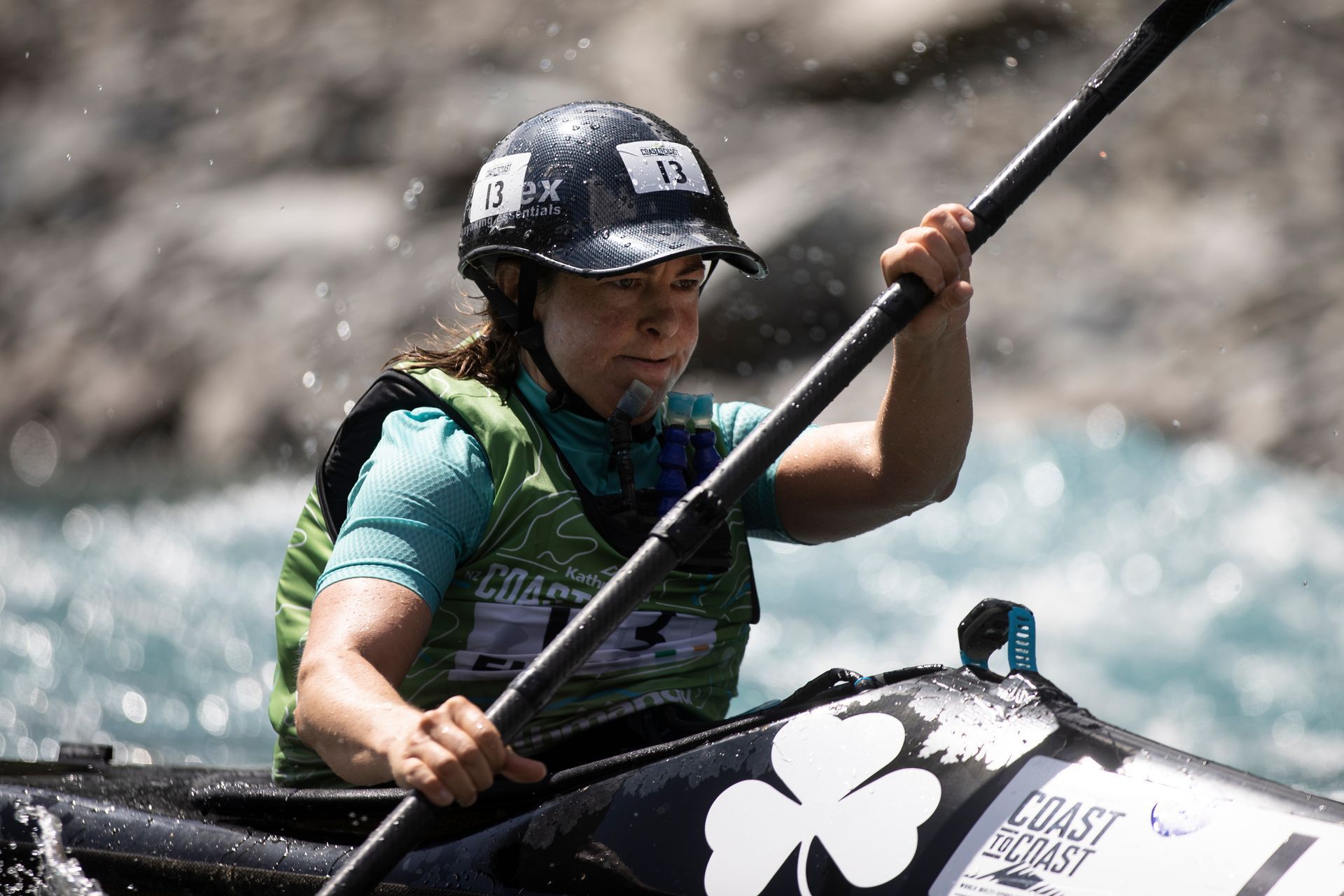
Cavanagh holds a 7 minute 2 second lead over Shallard heading into the final day and is relishing the opportunity to defend it on the river.
Race Director Glen Currie said the forecast suggests improving conditions overnight, allowing organisers to plan for the traditional route over Goat Pass for the longest day athletes tomorrow.
Currie expects the Waimakariri River to rise slightly from approximately 60 cumecs to around 90 cumecs following the heavy rain, potentially producing slightly faster paddle times.
“We always plan for every scenario, and while today wasn’t the course athletes originally expected, it was still a true Kathmandu Coast to Coast test,” Currie said.
“The safety of our competitors is our absolute priority, and I’m incredibly proud of how they adapted to some pretty wild conditions. If the forecast holds, tomorrow over Goat Pass will be classic Coast to Coast — challenging, spectacular and a real chance for the race to come alive.”
After a dramatic and rain-soaked opening, competitors now turn their focus to what promises to be a decisive and fast-moving final day across the Southern Alps.